
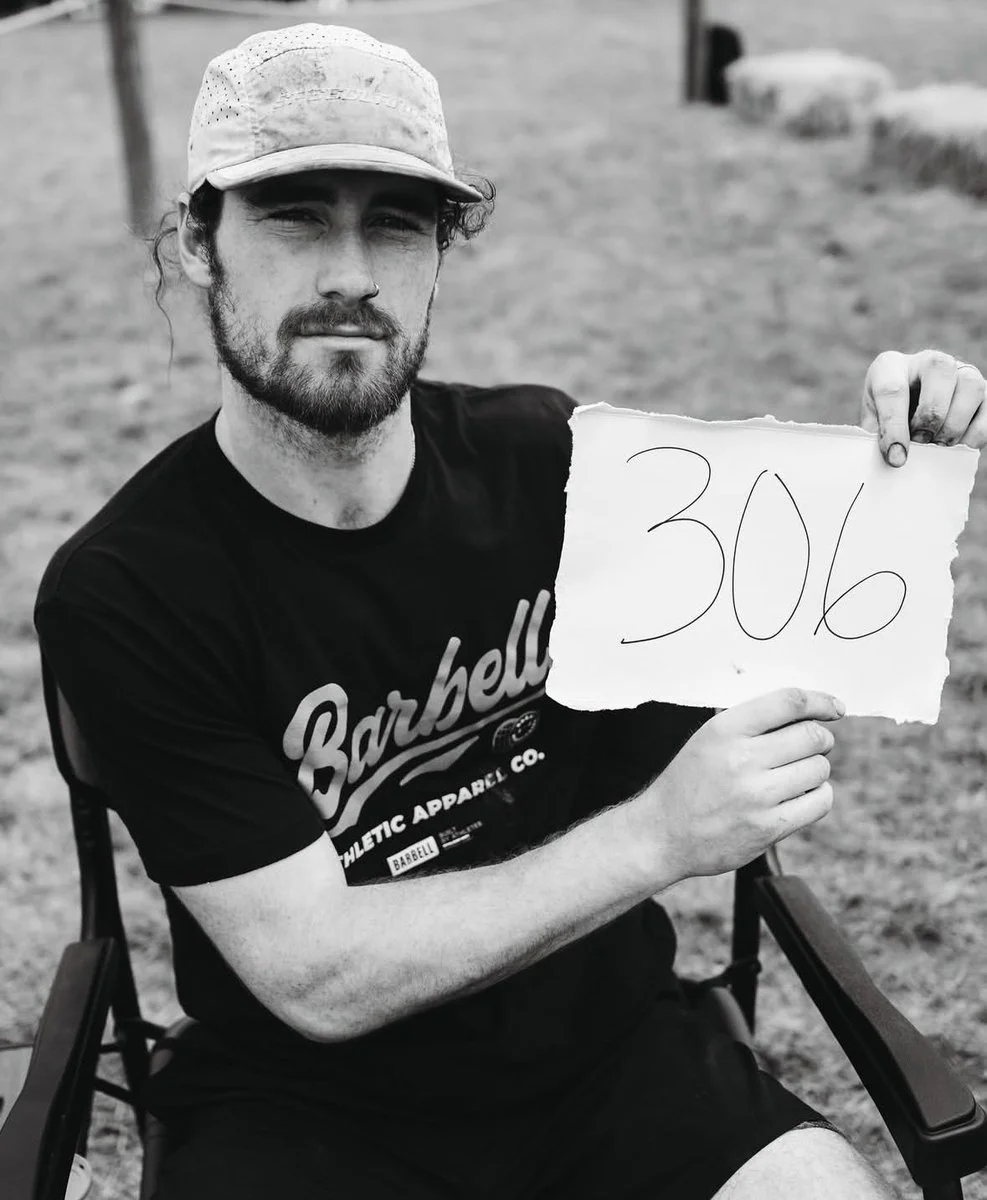
The Mindset Behind a 306-Mile Run. Nothing To Prove. Nothing To Hide.
Mark Dowdle is the best athlete in the world that you’ve never heard of. His obscurity is not because he lacks excellence, but because the arena he competes in doesn’t reward the mindset most people chase.
A former NCAA Division III football player, Dowdle has transitioned into ultramarathoning, a unique blend of mental and physical sport in which participants cover long distances, often 100+ miles. Ultrarunning has been around for a long time but in 2011 a new form of crazy emerged in ultrarunning.
It’s called the “Backyard Last Man Standing Ultra.” Here’s how it works.
Every hour on the hour participants run the same 4.2 mile loop.
They have exactly one hour to finish the loop.
If they finish in under one hour they can rest, eat food, and relax in their tent.
Then on the hour the next loop starts. Same rules, 4.2 mile loop in under one hour.
The race goes on until there’s one person remaining.
BPN Go One More Ultramarathon
A week ago in Texas, some of the best ultramarathoners in the world entered into the G1M ultra. 172 athletes participated in the first lap. In the field of participants were 2025 defending co-champions Kim Gottwald and Kendall Picado Fallas. Last year Kim and Kendall completed 56 laps for 235 miles in 47 hours.
You read that correctly. 235 miles in nearly two consecutive days of competition.
4.2 miles, every hour on the hour until a champion emerged. In 2025 a severe thunderstorm erupted forcing the two final runners to agree to a tie and co-championship.
With both co-champions in the 2026 field, Mark Dowdle, the obscure former college football player had his work cut out for him.
Imagine for a moment the type of mind it would take to compete in a challenge like this. When you’re traversing 100+ miles, some of them in the middle of the night, others in the middle of the Texas heat while running on a few minutes of sleep. It’s a mind-body challenge like no other. It requires extreme mental resilience.
I asked a group of undergraduate sports psychology students their opinion on how to manage the mind under extreme conditions like this.
“What do you think a guy like Mark Dowdle should focus on during an enduring challenge like this? What should he run for?”
Some replied, “He should just take it one lap at a time.” Others in a more competitive spirit said, “He should just run right beside the best runners and do what they do.”
I pressed them further - “We’re talking about extreme psychological endurance here. What is it that keeps people going when things are uncertain, uncomfortable and difficult?”
Days without sleep. Hundreds of miles on the body. Extreme blisters and soreness. And an alluring exit where all you have to do is stay in your chair when the next lap starts.
A student chimed in “I think in order to keep going you’d really have to have your identity wrapped up in it. Like it’s got to really mean everything to a person. If you’re casually interested you’d probably quit when it gets hard.”
Another built on the argument “I think you’d have to think a lot about what it would feel like to win, how satisfying it would be for your people to cheer for you at the finish line and how the crowd would cheer for you.”
What We Want Most
Without realizing it the last two comments from students were ⅔ of what I would call “Counterfeit Success” and it is the fuel that drives ambition drift in a lot of high performers' lives.
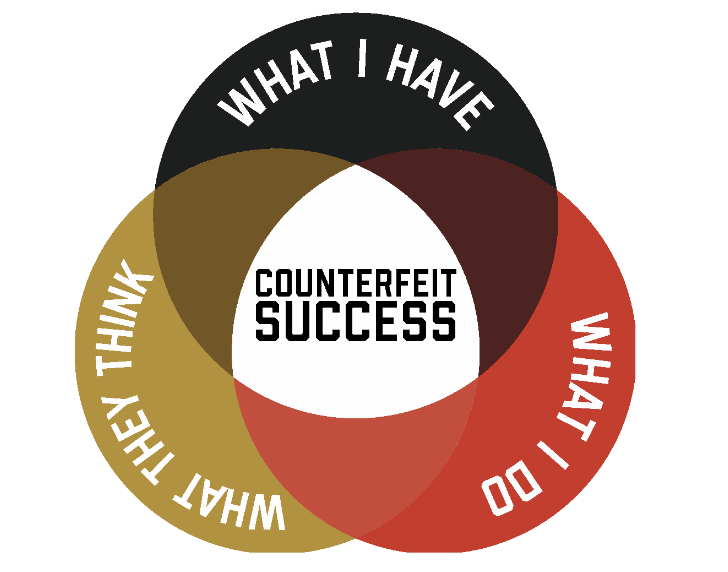
This is a form of success that is wholly defined by
What I Have
What I Do
What They Think
And unfortunately, this is a scoreboard that runs most peoples’ lives.
In totality, these students felt where Mark Dowdle’s mind should go in the midst of extreme stress, strain, pain, and demand is to the very elements we would define as counterfeit.
They are counterfeit because they often compromise who we are for what we want. They’re a cheap imitation of what we really want.
Our greatest need is to be loved and accepted. Our greatest fear is the rejection of that love and acceptance. When we chase big successes we have to be careful that our mindset and heartset do not drift into thinking that achievement will address this great need to be loved and accepted. When we give way and allow our heart to be obsessed with achievement we often orient our entire approach to performance around a counterfeit form of success.
Traditional cultural thought would say this is exactly where the mind of Mark Dowdle should go when the pain sets in.
But as we find out - his mind goes anywhere but this place.
Our Greatest Need
If it’s true our greatest need is to be loved and accepted then it sure becomes tempting to think that achievement will solve our greatest need. The cultural formula becomes.
Train + Suffer + Succeed = Fulfill our greatest need.
The formula feels clean. It just doesn’t hold up for very long.
The problem with this all too common achiever's anonymous formula is that it is an outside-in approach to a core human problem that is best solved inside-out.
This lie that we’re all told, that if we achieve enough, earn enough, are significant enough, we’ll fulfill our greatest internal need and will secure our future from rejection.
Performance coach Jim Murphy calls this the affluenza virus. It’s when our heart gets obsessed on these five things:
Possessions
Achievements
Looks
Money
Status
The influenza virus can make your body sick. The affluenza virus can make your heart and mind sick and it is running rampant these days.
A Heart-Set / Mindset That Works
Back on the course in Texas, the BPN Ultra is four days old and is in the final stages of lap 72. Mark Dowdle and Kendall Picado Fallas complete the 302nd mile with just 13 seconds to spare.
This means they are right back on the starting line with no break as the next lap begins. Off they go, the only 2 competitors left in a 172 runner field.
Where would your mind be in the loneliness and exhaustion heading into 303 miles?
While interviews continue to be released with Mark Dowdle, here is a perspective he shared weeks BEFORE the race that can give us a glimpse into the mind and heartset he had in 73 laps on the course.
“My value is not in running. Whether I win or lose this next race, or whether I have great success from a materialistic, external value type of thing, I don’t get a lot of motivation or value around that. I don’t feel like I’m coming into this race having to prove anything or having to win this race in order for me to be validated as a person.”
This goes well against the grain of a counterfeit pursuit of success. It’s almost as if Mark Dowdle has created an approach to high performance FROM a secure identity instead of thinking success will provoke a secure identity.
Without realizing it, Mark Dowdle described perfectly what we call an “Authentic Pursuit of Success.” This is an approach marked by a heartset and mindset that is secure internally. A performance approach that enters the arena fully satisfied in knowing
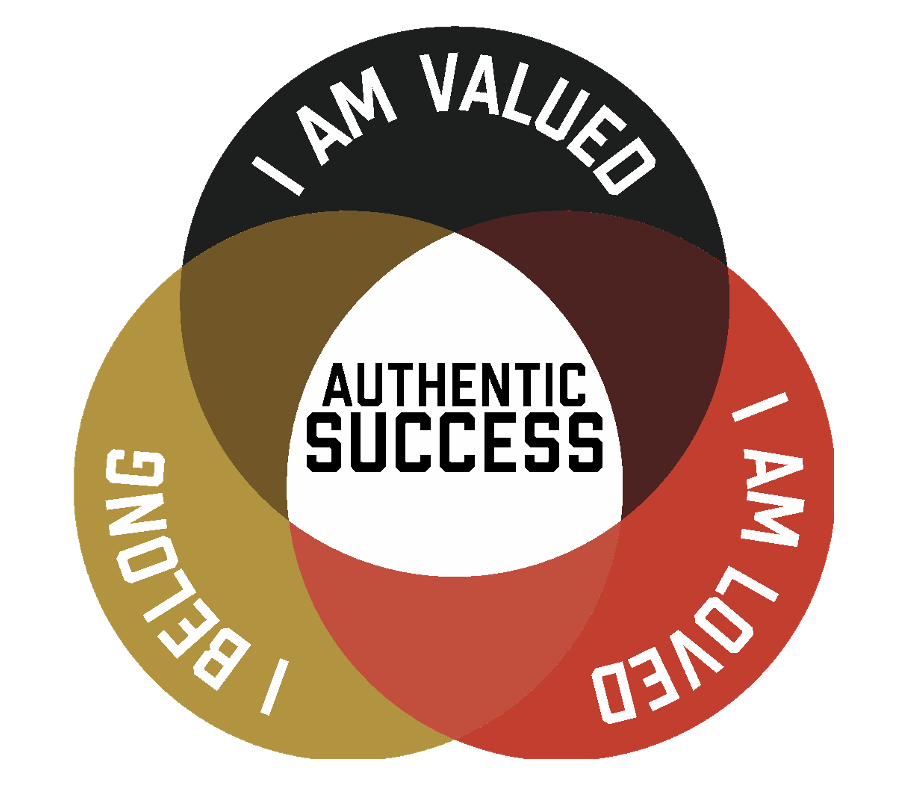
Everything changes when we live and perform (freely) from this place.
Counterfeit success asks: What do I need to achieve to prove myself?
Authentic success asks: Is this pursuit an expression of WHO I am… not a search for who I am?
They say the man who loves walking will walk further than the man who loves the destination.
Mark Dowdle traversed over 300 miles with nothing to prove.
How much of the standard “chip on your shoulder” prove to everyone you’re a champion approach is really just a materialistic culture rubbing off on you?
How much of your own achievement process is being jammed up by the notion that you NEED the outcome to feel loved, valuable, or belong in some place reserved for “successful” people?
What could possibly validate you more than what you already have in your life?
There’s a different way to compete.
Nothing to prove, nothing to hide.
-
This is the foundation for the work we do inside Stay The Course Leadership. Helping high performers compete from a secure inner life, not for one.
If you’re exploring what this could look like for yourself, your staff or your team - reach out, I would be happy to share.
Stay The Course,

